top of page


Spurgeon
Chair Caning & Seat Weaving
Hand-Woven Cane & Cane Webbing
Numerous times I've had chairs brought to me that the client thought was hand-woven cane when it was actually cane webbing. To tell the difference, a hand-woven cane seat has holes around the edge through which the cane is woven. Cane webbing has a groove around the edge of the seat into which is pressed a pre-woven sheet of cane webbing and then reed spline is pressed into the groove to hold the cane in place.
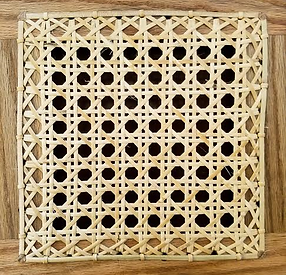
Traditional Weave in Hand-Woven Cane
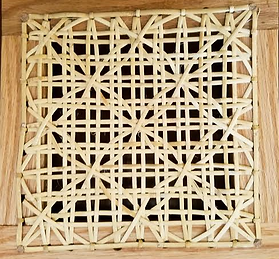
Daisy Chain Weave in Hand-Woven Cane

Double Daisy Chain Weave in Hand-Woven Cane
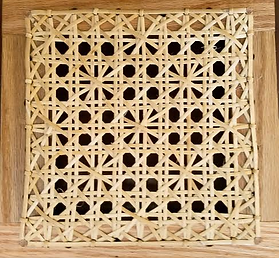
Daisy Chain & Button Weave in Hand-Woven Cane
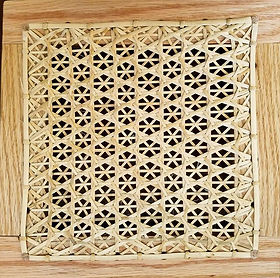
Spider Web Weave in Hand-Woven Cane
This weave uses two different sizes of cane

Lace Weave in Hand-Woven Cane
This weave uses two different sizes of cane

Star Weave in Hand-Woven Cane
This weave uses two different sizes of cane
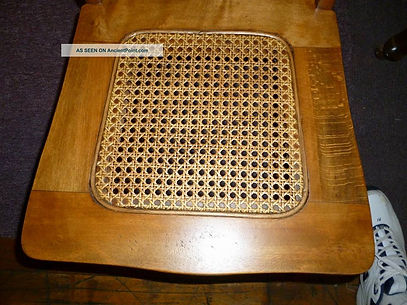
Cane Webbing in the Traditional Weave
This weave is available in six sizes of cane and four other woven patterns
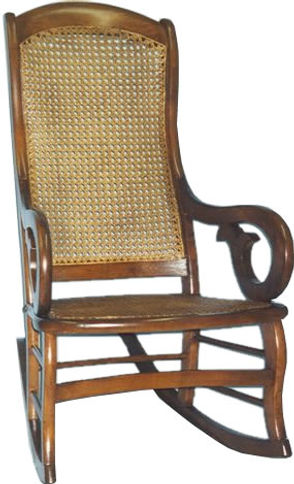
An important note on the Curved Back Rocker: If you look at the profile of the back of the rocker from both the top and the side, you'll note that the back curves inward in the center from both directions. This type of caning should only be done by an experienced caner who knows specifically how to weave the back. While the amateur weaver will simply go through the weaving steps in order and create an uncomfortable hump in the middle of the back, the experienced caner knows the deepest parts of the curves need to be entirely woven first and then weave your way out into the corners. In this manner, the weaving follows the intended three-dimensional curves of the back which makes it conform nicely to the human back making for a rocker of exceptional comfort.
When the chair has both a woven seat and back: I've often had clients bring me such chairs where the seat understandably wears out long before the back, wanting only a new seat. I'm glad to do as the client wishes, but it should be noted that cane turns darker over the years and the new cane in the seat will be much lighter in color than the aged cane in the back. I have a blending stain I can put on the new seat to make the seat match the darker color of the back, but the discerning eye can see the difference between the stained new seat and the naturally aged back. I also make no guarantees that the stain on the seat won't rub off on clothing, particularly if the clothing is damp such as from perspiration. A finish can be added over the stain by the client if they so wish, but it isn't something I recommend nor perform as this causes the new cane to become brittle and reduces the life of the seat.
bottom of page